
Rule guide
Schengen 90/180 rule: how the rolling window works
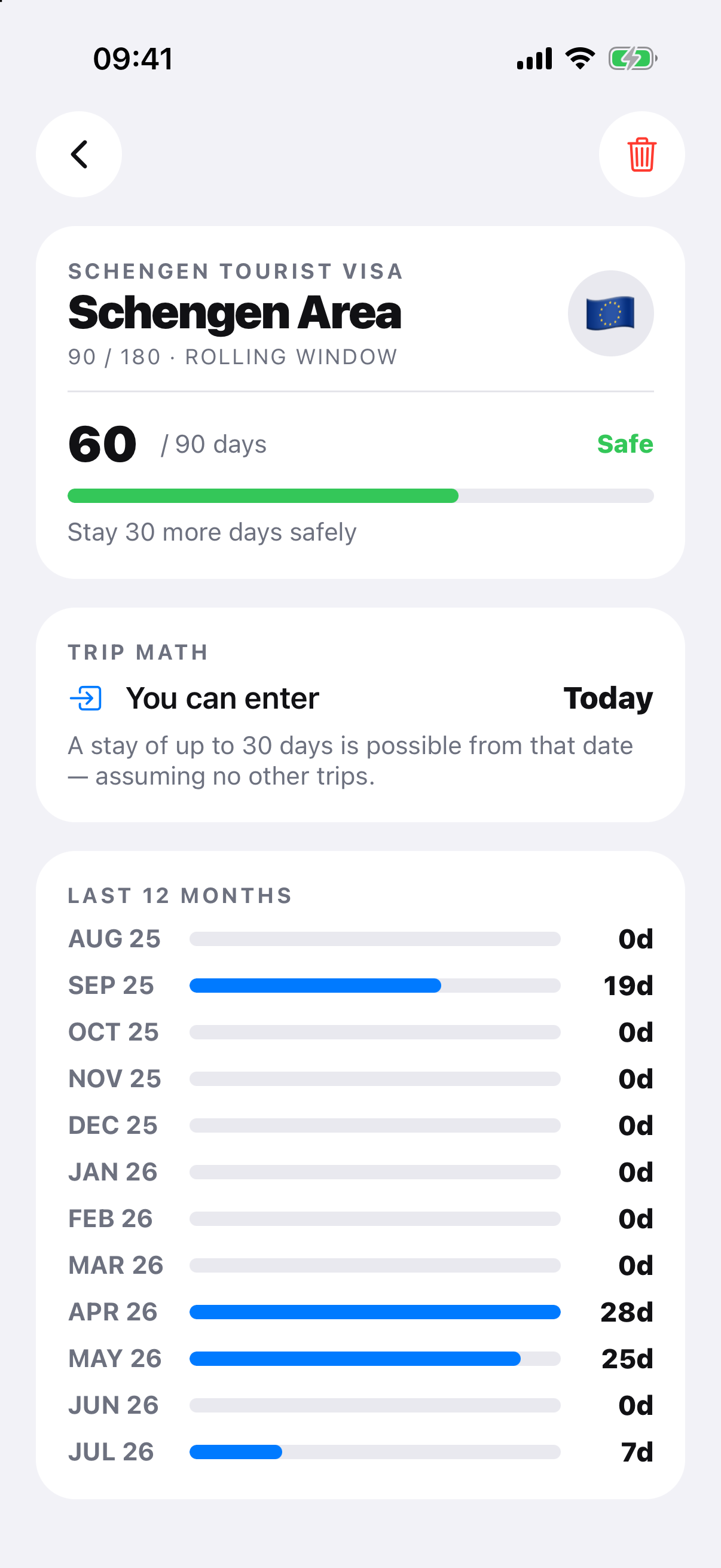
For many non-EU short-stay visitors, the Schengen limit is 90 days in any rolling 180-day period. Both entry and exit dates normally count. The window moves each day, so a calendar-year total cannot replace the official calculation. Your nationality, visa and residence status can change what applies.
What this count tells you
The count helps you review days used for a short stay across the Schengen area. It does not decide whether you may enter, extend a stay or rely on an exemption. Border authorities make those decisions.
How the window moves
For each day of presence, look back over that day and the previous 179 days. Count qualifying Schengen days in that period. A day can leave the window as time moves forward, which is why the available balance can change even while you are outside the area.
- Treat arrival and departure as days of presence.
- Count the Schengen area as one area, not separate national allowances.
- Check residence permits, long-stay visas and other exceptions separately.
Fictional example
Example only: if Priya records 35 qualifying days in spring and 40 in summer, she has 75 days in the relevant window before considering another trip. She must still place every date into the rolling window and confirm her own status with the authority.
Official record and rule sources
Check the authority.
RoamCount for iPhone
Keep the dates behind the count.
Open RoamCount without putting countries, dates or personal travel details in the link.
Open this counter in RoamCount